
Development of a CAE-Based Process for Evaluating High-Pressure Washing Sealing Performance of Automotive Exterior Lamps Considering Molding Deformation
Copyright Ⓒ 2026 KSAE / 242-12
This is an Open-Access article distributed under the terms of the Creative Commons Attribution Non-Commercial License(http://creativecommons.org/licenses/by-nc/3.0) which permits unrestricted non-commercial use, distribution, and reproduction in any medium provided the original work is properly cited.
Abstract
In the automotive industry, ensuring exterior lamp gasket sealing under harsh conditions is vital. The High- Pressure Water (HPW) test is commonly used but repeated trials increase costs and delay schedules. This study presents a structural analysis-based approach to predict sealing performance early in design. Experiments revealed that permanent deformation of the housing had a minimal impact, whereas gasket permanent set and molding variation had significant effects, reducing the actual compression from 2.5 mm to 0.57 mm. A Computer Numerical Control (CNC)-machined scaled model was used to eliminate molding variation, and HPW tests identified 0.7 mm as the minimum compression threshold for leakage-prevention. Using ABAQUS with a Hyperfoam Ethylene Propylene Diene Monomer (EPDM) model, 24.0 kPa gasket stress was established as the performance criterion. Applying this to mass-production models confirmed all exceeded the threshold, with HPW tests passing. The method improves design robustness, reduces rework, and provides a standardized Original Equipment Manufacturer (OEM) verification framework.
Keywords:
Rear lamp, Gasket, EPDM foam, Air leakage, Hyperfoam model, Molding deformation1. Introduction
In the automotive industry, ensuring the durability and reliability of components against external environments is becoming increasingly important. In particular, components exposed to the exterior of a vehicle, such as exterior lamps, are subjected to various external conditions during driving, including rain, dust, and water leaks, and must maintain reliable sealing performance even under these conditions. Ensuring sealing under high-pressure water spray conditions, such as the High-Pressure Water (HPW) Test, is a critical challenge from both design and quality assurance perspectives.
Traditionally, physical testing has been the primary method for verifying gasket sealing performance.1) However, this frequently resulted in repetitive testing and rework during product development. This approach led to persistent issues such as increased quality costs and development delays. For our company, a total of 39 retests were conducted on seven development models from 2016 to 2020 to meet HPW test requirements. This demonstrates the limitations of a test-dependent verification system.
Therefore, a predictive process is required to secure sealing performance through preemptive predictions using structural analysis in the early stages of development, and then to verify the design based on these predictions. In particular, it is essential to establish an analysis technique that can accurately reflect the nonlinear properties of foam rubber gaskets and a judgment criterion that can ensure consistency with actual test results.
In this study, we propose an analysis process that can precisely analyze the compression behavior of a gasket based on the Hyperfoam model of ABAQUS2-4) and structurally predict the occurrence of air leaks. Furthermore, by conducting scaled-down model testing and mass-produced vehicles, we establish analysis criteria and verify their validity. Through these analyses, we aim to present a method for improving design integrity and reducing quality risks in the early stages of development.
2. Derivation of Failure-Mode Influencing Factors
In this chapter, in order to systematically identify the cause of the deterioration of the sealing performance of the rear lamp gasket in the HPW Test, the failure mode was defined and the major factors affecting it were derived. To this end, the HPW Test was conducted according to the test specifications provided by the automaker, and the influencing factors were analyzed based on the test procedure and observation results at each stage.
2.1 Test Configuration and Evaluation Flow
The HPW test is designed to simulate complex conditions such as high/low temperature, load, moisture, and HWP that components may face in real-world use environments. Specifically, the HPW Test is designed to evaluate waterproof performance by locally spraying HWP on the front of the rear lamp, while allowing water to flow into the rear, rather than being sprayed directly. The test procedure is illustrated in Fig. 1.
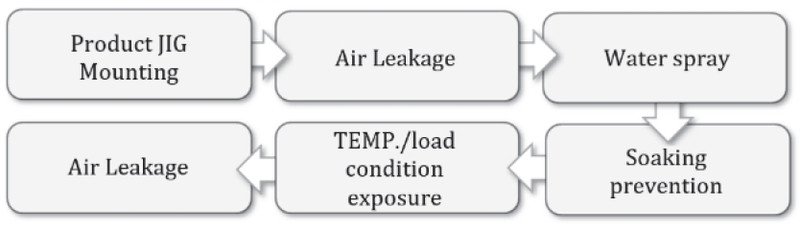
HPW test evaluation flowchart
While mounted on a jig (loaded), the test specimen is left exposed to high/low temperatures and lighting conditions for tens of hours to accelerate the thermal deformation of plastic materials and changes in gasket materials (e.g., loss of elasticity) that may occur during long-term use.
After heat/load exposure, the specimen is exposed to a humid environment at room temperature to reflect the material's moisture absorption and stress relaxation effects.
As shown in Fig. 2, water is sprayed through the tester's nozzle at the specified pressure to verify the watertightness performance under leakage conditions that may occur during actual driving.
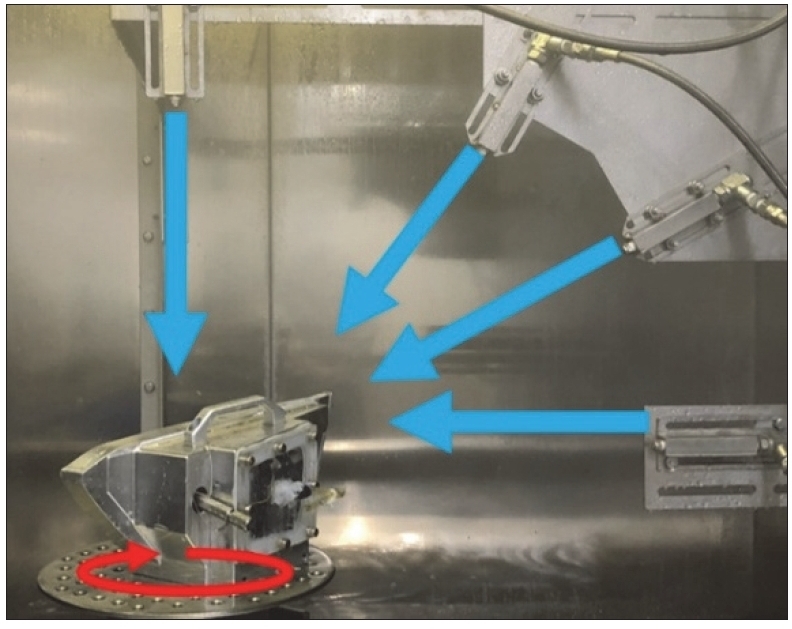
High pressure water test
Finally, air is injected into the product to evaluate the sealing performance under pressure conditions and determine the presence of leaks.
2.2 Influencing Factor Analysis Procedure
Following the HPW test sequence, we focused on analyzing the key influencing factors during the temperature/load condition aging stage and the air leak evaluation stage. The test method, measurement equipment, and result interpretation process for each factor are described in detail below.
When the housing is mounted on the assembly jig, the gasket is compressed and the load is transferred to the housing. This evaluation aimed to determine whether permanent deformation occurs when the housing is exposed to low- and high-temperature environments for extended periods.
A 3D coordinate measuring machine (3D CMM) was used to precisely measure the housing shape changes before and after temperature/load aging. The measurement location was the housing contact surface where the gasket is seated, and the deformation that could affect the compressive force was quantified, as shown in Fig. 3.
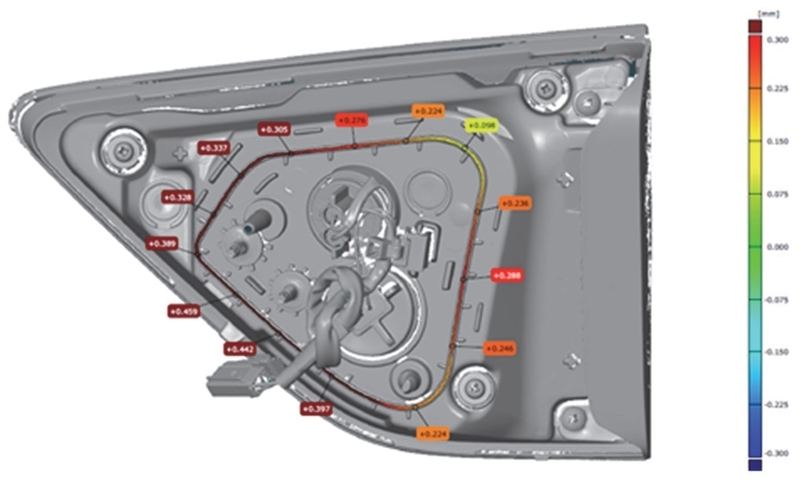
3D Measurement of housing deformation
The test results (Fig. 4) showed that the maximum deformation before and after the test was 0.09 mm, which is only approximately 3 % of the design compression amount of 2.5 mm. Since the deformation is so small that it is very unlikely to lead to a decrease in sealing performance,5) permanent deformation of the housing was excluded from the failure factors.
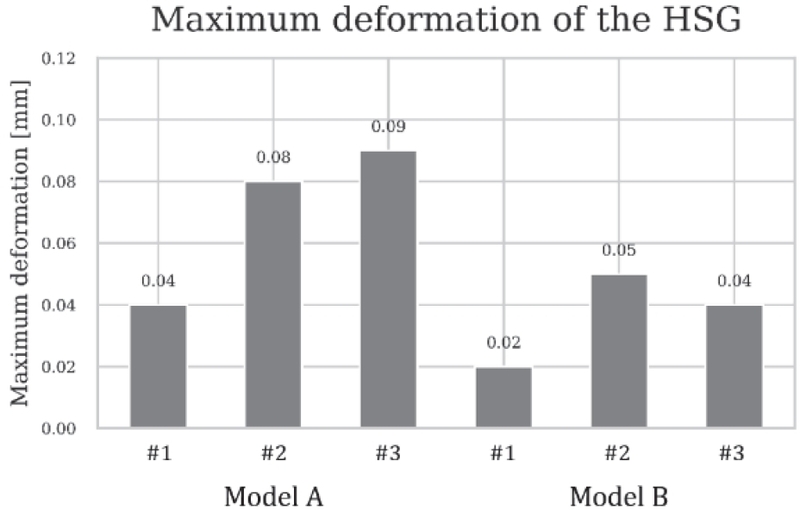
Housing deformation amount by vehicle model
To evaluate the long-term compression performance of the gasket material, test specimens were prepared and a dedicated jig was developed to reproduce a compressed state. This allowed for precise reproduction of a constant compression amount.
This test was also conducted under temperature and load conditions, with the specimens left for tens of hours. As a result, based on the specific Ethylene Propylene Diene Monomer (EPDM) foam specifications,6,7) approximately 1.5 mm of permanent deformation8) occurred. This corresponds to approximately 60 % of the designed compression amount of 2.5 mm, and it was judged that mechanical properties of the material changed significantly after compression (Fig. 5).
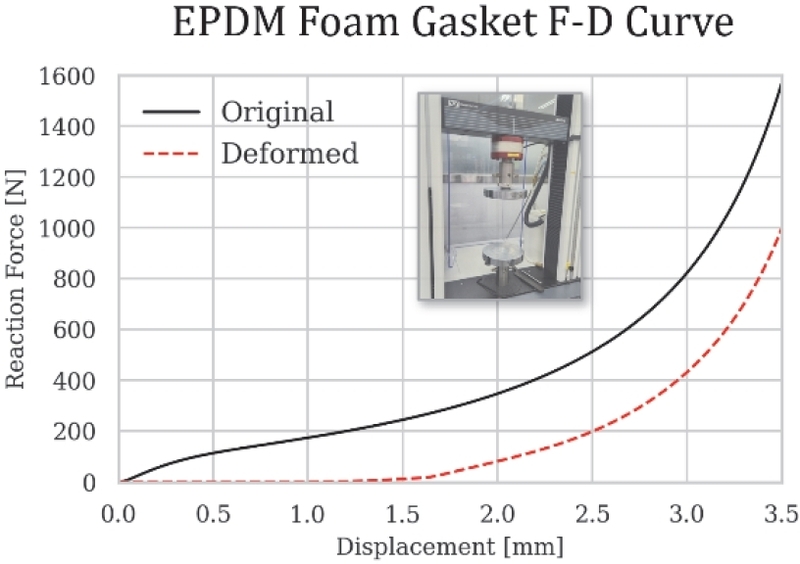
Gasket deformation (F-D curve)
Post-test measurements clearly demonstrated a decrease in the gasket's stiffness and elastic resilience,10,11) which could directly lead to a loss of the ability to maintain compression, resulting in a decrease in sealing performance. For this reason, permanent deformation of the gasket was selected as a key failure factor in this study.
To assess the impact of housing injection deformation (manufacturing deviation) on gasket compression, 3D CMM was used to compare the injection-molded housing components with design data. The measurement targets were four mass-produced rear lamp models (3-4 units each), and the injection deformation patterns of each test specimen were analyzed. The results (Figs. 6 ~ 9) revealed that deformation occurred in the direction of reducing the compression amount (sinking direction) in the three vehicle models. This deformation reduces the initial gasket compression and can lead to long-term deterioration of sealing performance.9)
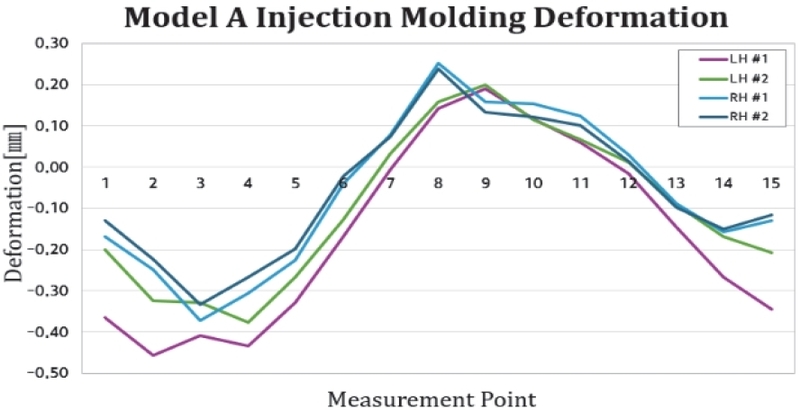
Gasket seat molding deformation in housing (model A)
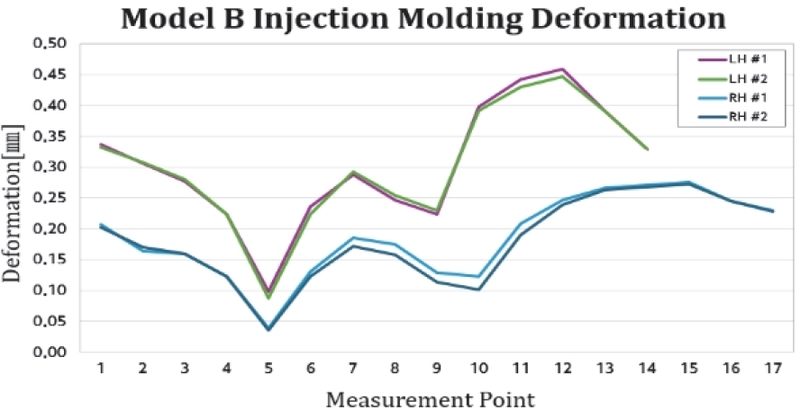
Gasket seat molding deformation in housing (model B)
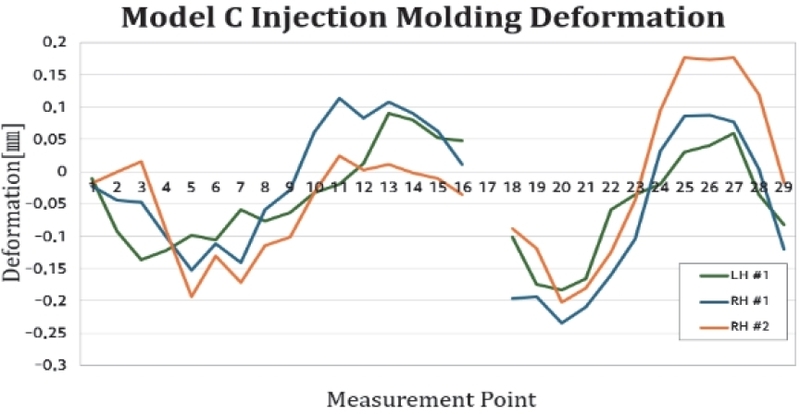
Gasket seat molding deformation in housing (model C)
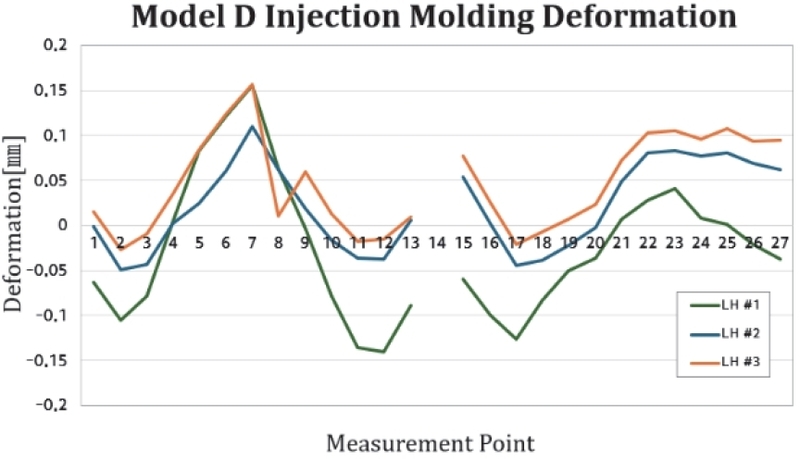
Gasket seat molding deformation in housing (model D)
Quantitatively, as shown in Fig. 10, the injection molding deformation dispersion resulted in an average compression reduction of -0.13 mm, with a standard deviation of -0.10 mm and a deviation of -0.43 mm at 3σ. This represents approximately 18 % of the design compression amount of 2.5 mm, and when combined with the housing injection molding deformation dispersion, the risk of air leaks significantly increases. Therefore, the injection molding deformation dispersion of the rear lamp housing was also defined as a major failure factor.
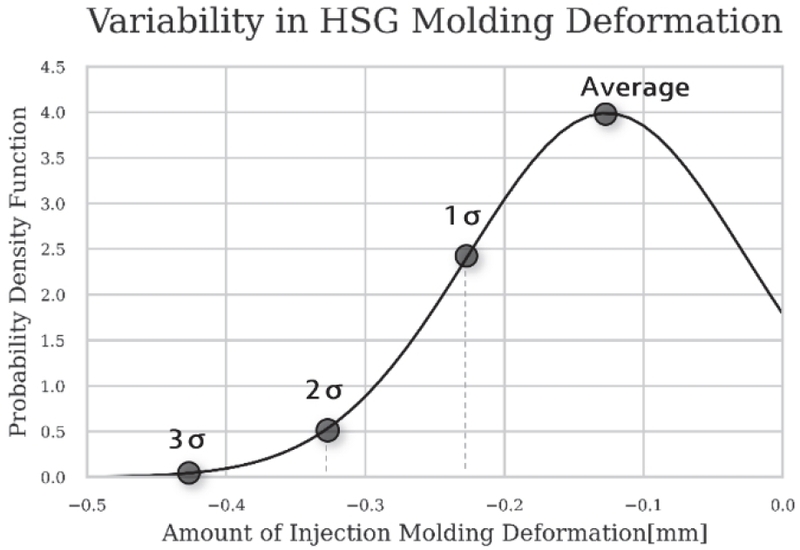
Variation analysis of housing molding deformation
3. Definition of Failure Causes
By consolidating the test and measurement results from Chapter 2, it was confirmed that the effective compression of the rear lamp gasket was significantly reduced compared to the design target.
The EPDM foam used in this study had a target gasket compression of 2.50 mm. However, under actual assembly and usage conditions, the combined effects of permanent deformation of the gasket and injection molding deformation of the housing resulted in a substantial reduction of the compression to 0.57 mm. This is summarized in Table 1.

Effective compression relative to design compression
4. Definition of Analysis Methodology
In this chapter, nonlinear static analysis was applied to structurally verify the causes of sealing performance degradation in the rear lamp gasket and to derive design improvement directions. The analysis was performed using the commercial finite element analysis program ABAQUS. Specifically, the Hyperfoam model was employed to accurately reproduce the nonlinear behavior and compressibility of the EPDM foam used as the gasket material.
The Hyperfoam model can simultaneously simulate the complex stress-strain curve, large deformation characteristics, and volume change behavior of the foam, making it ideal for accurately predicting the physical behavior of the gasket under actual assembly conditions. Through this approach, we quantitatively analyzed the effect of the reduction in effective compression compared to the design compression on sealing performance and established the possibility of preliminary verification based on structural analysis.
4.1 Analysis Model Configuration
The analysis model is composed of Housing-Gasket-JIG (vehicle body mounting surface), as shown in Fig. 11, and the optimal element types and material property models were applied based on the material properties and geometric shapes of each component.
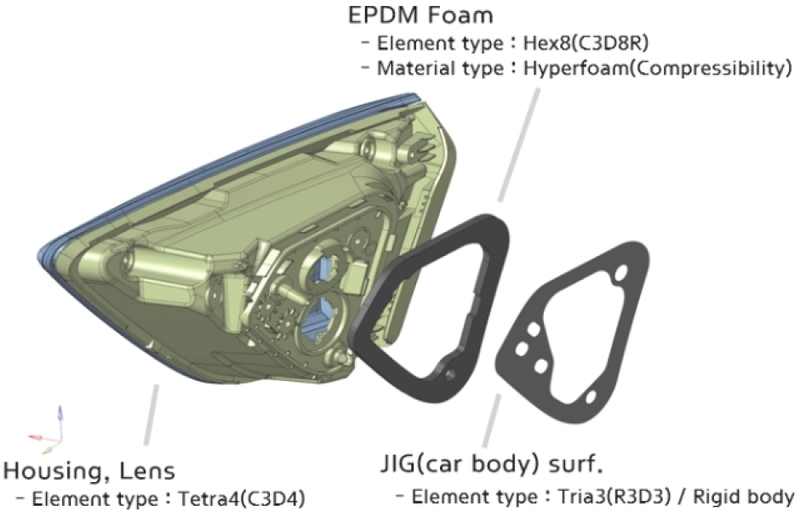
Element type
To reflect the geometric complexity and nonlinear behavior of the injection-molded plastic material, they were modeled using 4-node tetrahedral (C3D4) elements.
To accurately reproduce the nonlinear compression behavior of the EPDM foam, an 8-node hexahedral reduced-integral element (C3D8R) was used. Furthermore, the gasket exhibited permanent deformation when exposed to temperature and load conditions for extended periods. Therefore, a geometry that reflected this deformation was applied in the analysis. The material properties were also obtained through material property tests to determine the values changed after exposure to the conditions and reflected in the analysis model.
The JIG is relatively rigid and is assumed not to deform, so it is modeled as a rigid body based on 4-node (R3D3) elements.
4.2 Analysis Boundary Conditions
The analysis boundary conditions were set to replicate the air leak test environment of the actual HPW test as closely as possible.12)
Six degrees of freedom were constrained at the vehicle body fastening points.
To reproduce the state in which the gasket is compressed during the jig-mounting process, the previously defined compression amount was reflected in the displacement boundary conditions. Furthermore, the internal pressure applied during the air leak test was uniformly applied to the entire inner surface of the housing and lens. This pressure condition was intended to replicate the outward expansion of the housing observed during the test and to reflect the mechanism by which gasket compression changes with pressure application.
The applied constraint and load boundary conditions are shown in Fig. 12.
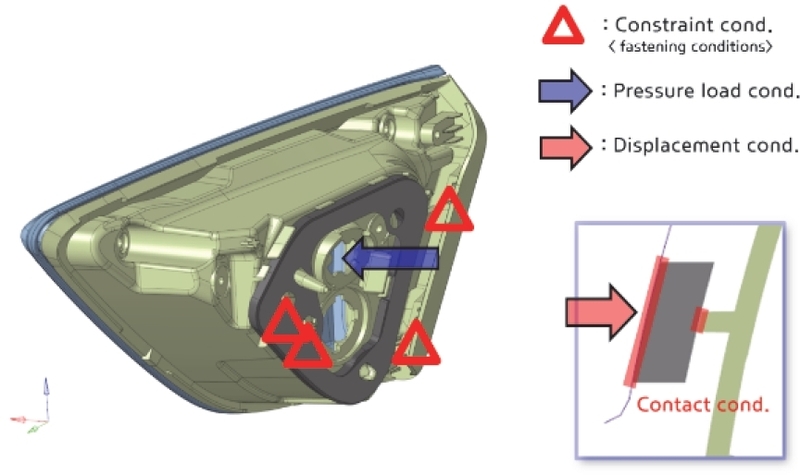
Analysis boundary conditions
5. Scaled-Down Model Principle Test
The scaled-down model principle test aims to eliminate the housing injection deformation variation seen in mass-produced products and to evaluate the pure correlation between gasket compression and sealing performance. To this end, air-leak tests were performed at a standard test air pressure used for design verification while excluding injection-molding deformation variation, thereby quantitatively identifying the minimum compression amount required to prevent leakage.
5.1 Test Configuration and Method
To eliminate housing deformation variation, a scaled-down model with a tolerance of .01 mm (1/100 mm) was manufactured using Computer Numerical Control (CNC) precision machining, as shown in Fig. 13. This scaled-down model was designed and manufactured with a simplified rear lamp structure and made of ABS, a common housing material. This eliminates the dent deformation factor that occurs during injection molding and allows for a direct correlation between gasket compression and air leak occurrence.
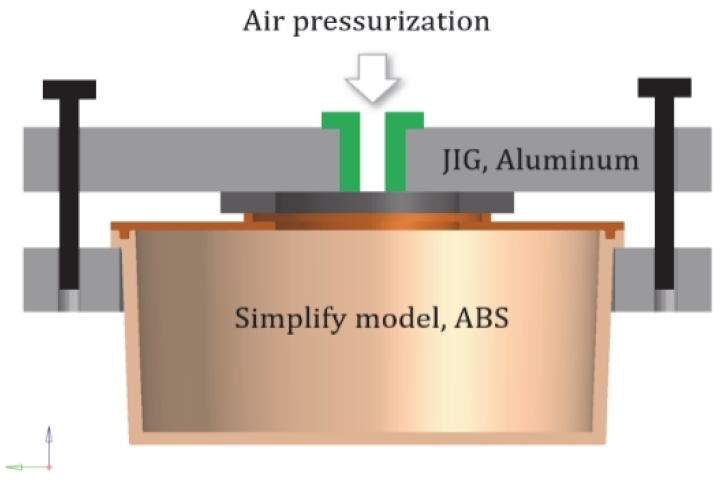
Reduced-scale model of rear lamp
The test conditions were the same as the air leak detection pressure used in the HPW test. Uniform pressure was applied and various initial gasket compression amounts (0.3 to 0.9 mm) were set to observe whether air leaks occurred.
5.2 Test Results
As summarized in Table 2, air leaks occurred in all specimens when the gasket compression amount was less than 0.7 mm. When the compression amount was greater than 0.7 mm, no air leaks occurred in any test specimen. As shown in Fig. 14, the 0.7 mm compression condition confirmed stable sealing performance despite pressurization. This was defined as the minimum compression amount that could be used as a criterion for analytical judgment.
Air leak test results by compression amount
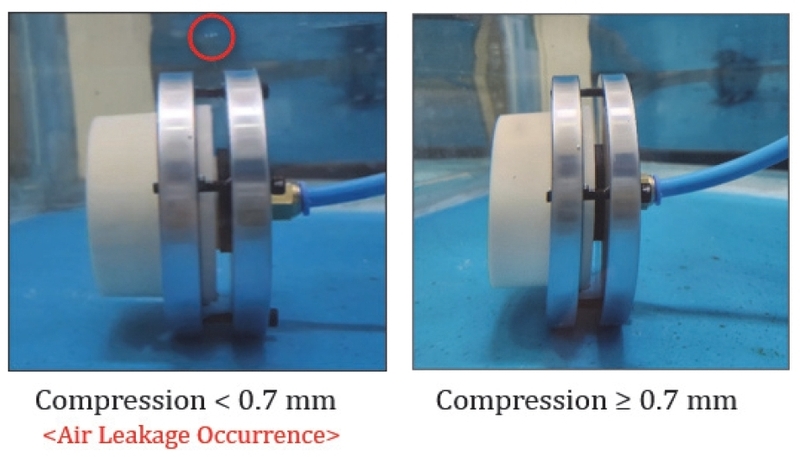
Air leakage test
5.3 Applications
The derived minimum compression of 0.7 mm is applied as a key input condition for the ABAQUS-Hyperfoam-based analysis model defined in Chapter 4. Based on this, a scaled-down model can be used to analyze the physical behavior of the gasket under the same compression conditions, and the results can be used to establish quantitative analysis criteria for assessing sealing performance. These criteria can be used as a preliminary assessment tool for verifying mass-production designs and predicting sealing performance.
6. Establishing Analysis Criteria
The scaled-down model tests performed in Chapter 5 experimentally confirmed that air leaks do not occur under air pressure conditions when the gasket compression is greater than or equal to 0.7 mm. In this chapter, the same test results were applied to the analysis model to numerically reproduce and validate the actual phenomenon. Furthermore, the analysis results were systematically analyzed to establish criteria applicable to the design phase.
6.1 Ensuring Gasket Property Consistency
The reliability of the structural analysis results depends largely on how accurately the material properties applied to the model reflect the actual material behavior. Therefore, compression tests were performed on EPDM foam to obtain load-displacement (F-D) curves, which were then used to develop the material properties for the analysis model.
The material model was implemented using ABAQUS Hyperfoam, with the polynomial coefficient set to N=2 to reflect the nonlinear behavior of the foam. The same test specimen conditions (50 mm × 50 mm × 5 mm) as in the test were replicated in the analysis by modeling the specimen with Hex8 (C3D8R) elements, and the analysis was performed under the same load conditions as the test.
Fig. 15 compares the F-D curves of the test and analysis results, demonstrating high agreement across the entire range, verifying that the analysis model adequately reproduces the actual material properties. Such consistency provides an essential foundation for ensuring the predictive reliability of the structural analyses conducted in the subsequent stages.
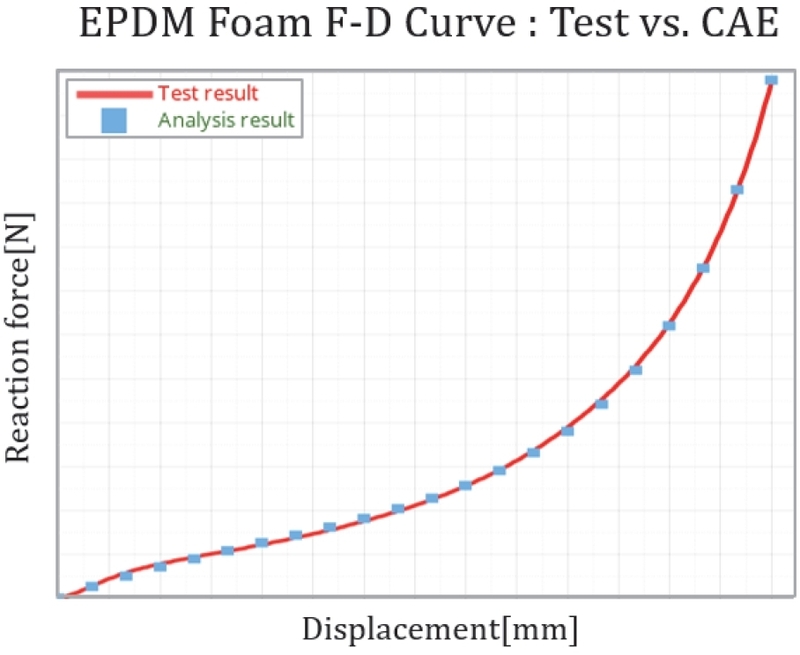
EPDM foam F-D curve (test vs CAE)
6.2 Establishing Analysis Criteria
The same scaled-down model geometry was implemented as an analysis model and analyzed using gasket stress under a compression amount of 0.7 mm. Gasket stress was selected as the analysis criterion because the stress distribution is uniform across the entire gasket cross-section and is not concentrated in specific local regions. Conversely, contact pressure is not a suitable criterion due to its high analysis sensitivity and low reproducibility.
Furthermore, the maximum stress is typically used as a criterion when assessing structural failure or safety. However, since this study approached the problem from a sealing-performance perspective, the minimum stress was defined as the evaluation criterion. Gaskets require uniform compressive force to be distributed across the entire cross-section to ensure sealing performance. If stress is not sufficiently generated in a specific area, that area can become a microscopic leak path, leading to a deterioration in airtightness. Therefore, ensuring a minimum stress across the entire gasket is crucial, and the minimum stress criterion quantifies this.
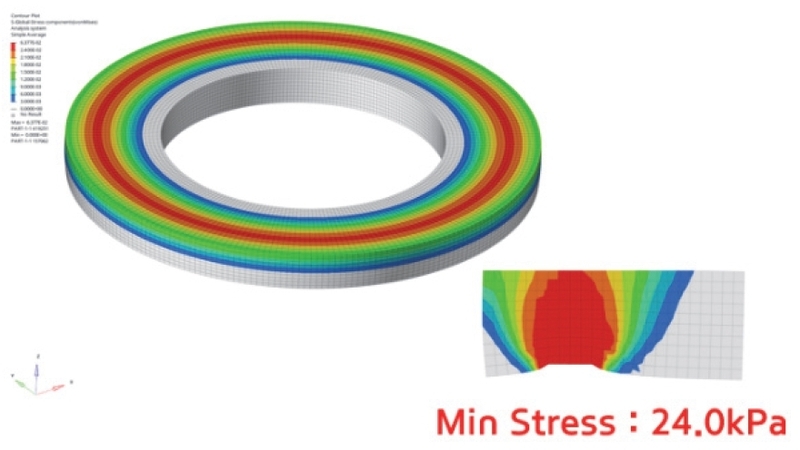
Min stress in the reduced-scale gasket model
As a result of the analysis, the minimum stress of the gasket was calculated to be 24.0 kPa under the condition of 0.7 mm of compression. Accordingly, this study defined that air leak does not occur when the Gasket Min Stress ≥ 24.0 kPa, and established this as the analysis judgment criterion.
7. Analysis Process Verification
The analysis criteria established in Chapter 6 (minimum gasket stress of 24.0 kPa or higher) were applied to actual mass-produced products to verify their validity. The validation targets were two vehicle models currently in mass production, and structural analyses were performed for each model under conditions reflecting the effective compression ratio (0.57 mm).
The minimum gasket stress for Model A was 28.9 kPa (Fig. 17), and for Model B, it was 25.5 kPa (Fig. 18). For both mass-produced models, the minimum analyzed stress was calculated as 24.0 kPa or higher, and the test results also yielded acceptable HPW test reliability results. This confirmed that the analysis criteria established in this study can be effectively applied to predict HPW test performance in mass-produced products.
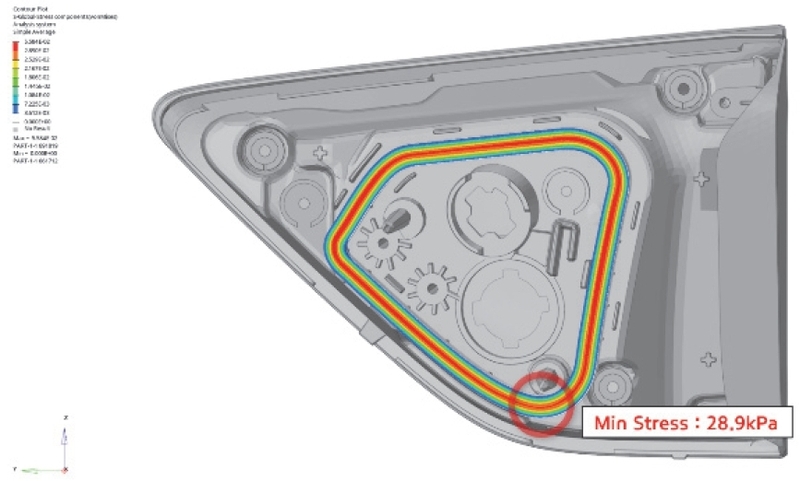
Validation for analysis evaluation criteria (model A)
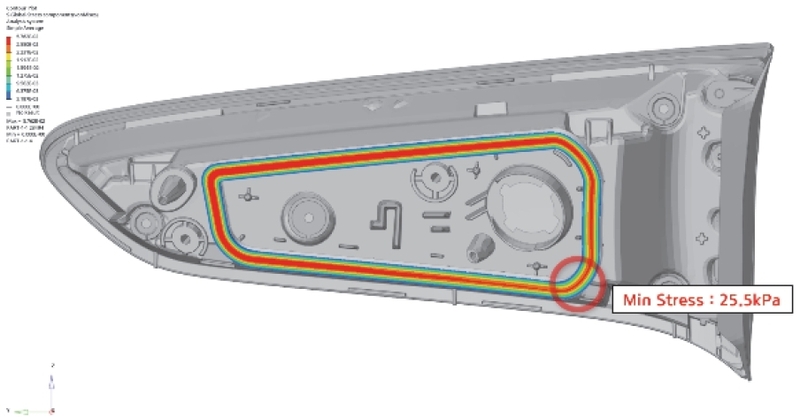
Validation for analysis evaluation criteria (model B)
8. Conclusion
In this study, we experimentally investigated the issue of sealing performance degradation caused by the potential water ingress into the rear gasket resulting from front-side injection under HPW injection conditions in a vehicle exterior lamp module. To ensure performance predictability at the design stage, the following procedures were undertaken.
- 1) Failure Mode Identification and Derivation of Key Influencing Factors: Potential failure modes under HPW conditions were analyzed through temperature and load aging tests, permanent deformation measurements, and injection molding deformation distribution measurements. As a result, while permanent deformation of the housing had a negligible effect, permanent deformation of the gasket and reduced compression due to injection molding deformation variations were identified as the primary causes of the degradation of sealing performance.
- 2) Effective Compression Identification and Performance Quantification: Test results confirmed that the effective compression under actual use conditions decreased to approximately 0.57 mm compared to the design compression (2.5 mm). This allowed for the quantitative identification of the performance gap between the design stage and mass-produced products.
- 3) Establishment and Verification of Interpretation Judgment Criteria: A precision-machined scaled-down model excluding injection molding deformation dispersion was manufactured and HPW tests were performed. As a result, it was confirmed that no leakage occurred at gasket compression amounts of 0.7 mm or more. Based on this, a structural analysis was performed using the ABAQUS Hyperfoam model. The minimum gasket stress (24.0 kPa), which is a factor that can indicate sealing performance under the given conditions, was set as the interpretation judgment criterion. When this criterion was applied to mass-produced vehicles, the criterion was exceeded in all models, and no leakage occurred in the HPW test, verifying the validity of the criterion.
References
- G. Y. Park, K. J. Yang, E. D. Ro, J. S. Park, M. S. Chon and H. W. Lee, Sealing Analysis of Sealing Rings with Respect to Rubber Material Properties for High Pressure Valve of FCEV, Journal of Institute of Convergence Technology, Vol.7, No.2, pp.13-16, 2017.
- H. S. Kim, Development CAE Process for Prediction of Automotive Watertightness, M. S. Thesis, Kangwon National University, Gangwon, Korea, 2019.
- S. Sim, Y. Kang and H. Kim, “Automobile Weatherstrip Reliability Evaluation by Structural Analysis,” KSAE Annual Conference Proceedings, pp.393–398, 2017.
- J. S. Yoon, Material Modeling and Finite Element Simulation for Prediction of Closing Performance of Door Weather Strips, M. S. Thesis, Sogang University, Seoul, 2018.
-
S. C. Kang, “A Study of Creep Characteristics of ABS (Acrylonitrile Butadiene Styrene) for Different Stress Levels and Temperatures,” Journal of the Korean Society for Precision Engineering, Vol.29, No.10, pp. 1137–1143, 2012.
[https://doi.org/10.7736/KSPE.2012.29.10.1137]

- B. G. Choi, M. H. Heo, S. M. Seo, H. R. Kwon, K. H. Kim and S. H. Park, “Analysis on Hyperelastic Model of Automotive Weatherstrip Rubber,” Proceedings of the KSAE Annual Conference, pp.2484–2489, 2017.
- B. Choi, M. Heo, C. Seo, H. Kwon, K. Kim and S. Park, “Hyperelastic and Viscoelastic Responses of Automotive Weatherstrip Rubber,” Proceedings of the KSME Annual Conference, pp.16–20, 2017.
- J. C. Park, B. K. Min, J. S. Oh, H. I. Moon and H. Y. Kim, “Numerical Prediction of Permanent Deformation of Automotive Weather Strip,” Transactions of KSAE, Vol.18, No.4, pp.121–126, 2010.
-
A. Tiwari, L. Dorogin, M. Tahir, K. W. Stöckelhuber, G. Heinrich, N. Espallargas and B. N. J. Persson, “Rubber Contact Mechanics: Adhesion, Friction and Leakage of Seals,” Soft Matter, Vol.13, No.48, pp.9103–9121, 2017.
[https://doi.org/10.1039/C7SM02038D]
-
S. Buchen, N. H. Kröger, T. Reppel and K. Weinberg, “Time-Dependent Modeling and Experimental Characterization of Foamed EPDM Rubber,” Continuum Mechanics and Thermodynamics, Vol.33, No.4, pp.1747–1764, 2021.
[https://doi.org/10.1007/s00161-021-01004-4]
- C. Wehmann, A. Kulkarni, f. Durn and M. Gulcur, “Modeling the Compression Set of Elastomers to Predict the Lifetime of Sealing Systems by Finite Element Analysis,” 21st International Sealing Conference (ISC), pp.545–558, 2022.
- Hyperelastic Material Models in Finite Element Analysis of Polymers and Rubber Compounds, Supplier Technical Report (Axel Products, Inc.), 2022.